Good Neighbour
Capstone Project 2026
Design Challenge
My task was to find a problem that we could solve with our design skills. Then, we were to use our skills as designers to try to help or create a solution in a long term project.
The intent was to go through the entire design process from initial concept to completion. After some thought on a topic, one thing came to mind — people, especially the elderly, have been lonelier than ever.
The Question
I’m a designer — what would I do to design something that would help the vulnerable or lonely? After some careful thought, a common thread that exists between all people are the need for groceries.
Great — I could do something with that. What pain points are there? Could it be social, somehow?
Surveying the Neighbours
I did a literature review, read over articles and cataloged some of the common threads. After that, I sent a survey about grocery stores and loneliness to everyone I could (especially targeting retirees to see if my assumptions held any weight).
While this was out, I read a lot of non-scholarly articles on the topic as well. My research came back with a few key statistics; 100% of surveyed people that were 65 or older preferred service and community over efficiency and speed.
As with everything, while the majority of the world moves towards things like greater efficiency and streamlining, there is a ‘counterculture’ of slow, friendly and local.
The next step was to do some research on the type of person that my project would be directed towards.
As time passed on this project, the Buy Local movement in Canada had grown in strength, so it was meaningful for me to add it as a focus for the project.
What’s more empathetic than helping your neighbours and the ones that make all the things that you enjoy?
Refocusing
I didn’t want to just simply mimic others, so I took my research and really reconsidered what I could do. My research indicated there was a niche that could use filling, and I was certain I wanted to make it a force for social good — something that treated people with the care and empathy they deserve.
Trying to get an existing grocery store to buy into my idea seemed like a real challenge, so I took some time considering my base assumptions and ideas so far…
What if it wasn’t a whole grocery store? Cafes are pretty popular places to hang out for people…
The ‘buy local’ movement is stronger than it has ever been…
Scaling Down
What about a little grocer? Just the essentials, prioritize local first and always Canadian, with a warm, comfortable cafe that people could unwind at. Okay, that was a direction I could go for.
With the scaling down of the idea, I found that
some ideas that seemed intimidatingly ambitious were suddenly in my reach. Full-on supermarkets are a well oiled machine, and trying to change that
myself was a daunting process. Something smaller and more intimate could do just as good to the people that need it.
Finally, it was time to move out of the realm of research and feasibility studies into doing what I had been waiting for — actually designing.
Changing the Direction
Some of my research was no longer relevant, but there was that kernel of the most important pillars of this project still in place: community, empathy and social good.
With this being our university’s capstone project, there were several different streams all contributing to the same river. A brand identity needed to be created, as well as a website, and finally this case study you’re reading right now. I love package design, and I wanted this project to reflect that.
Packed with Care
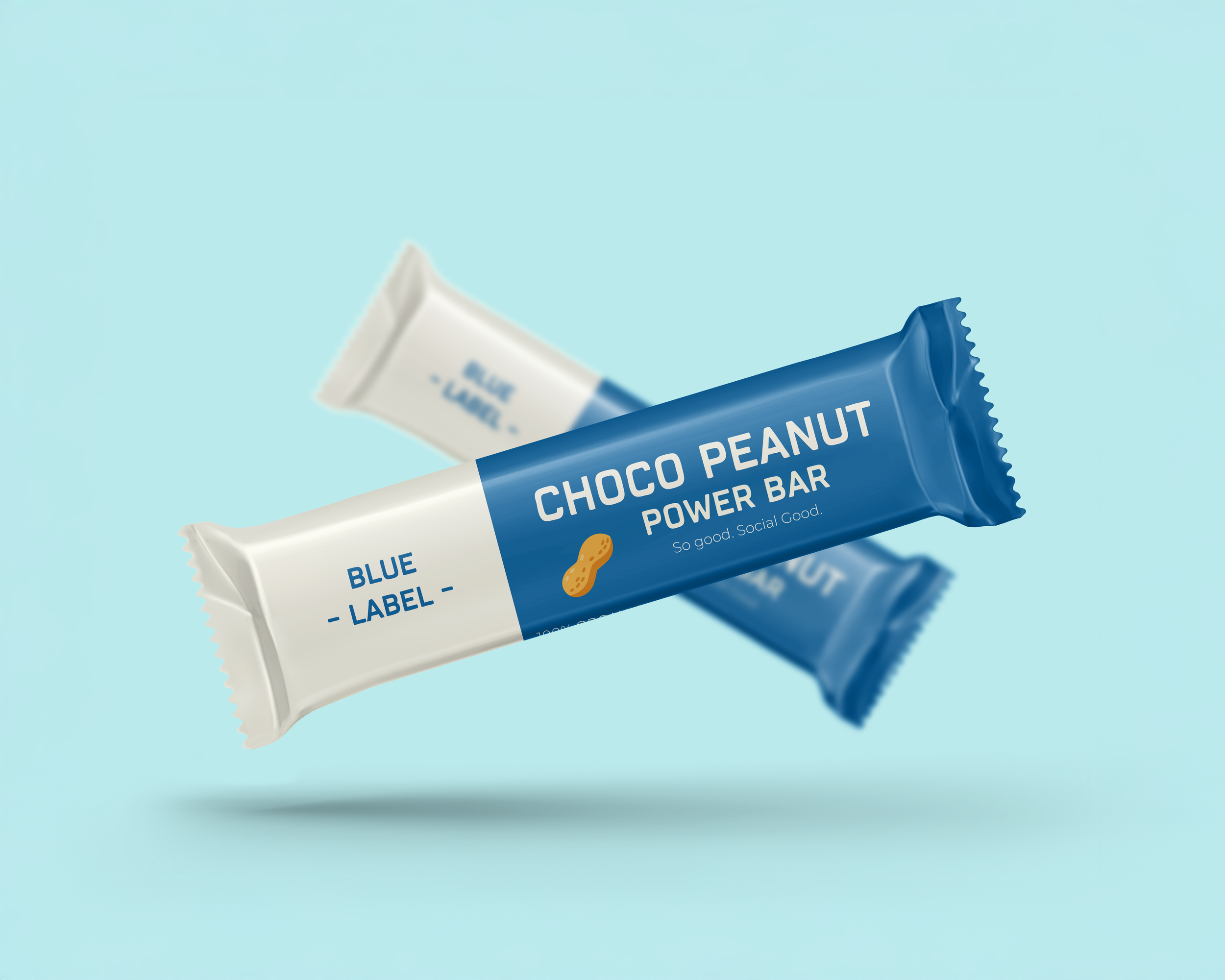
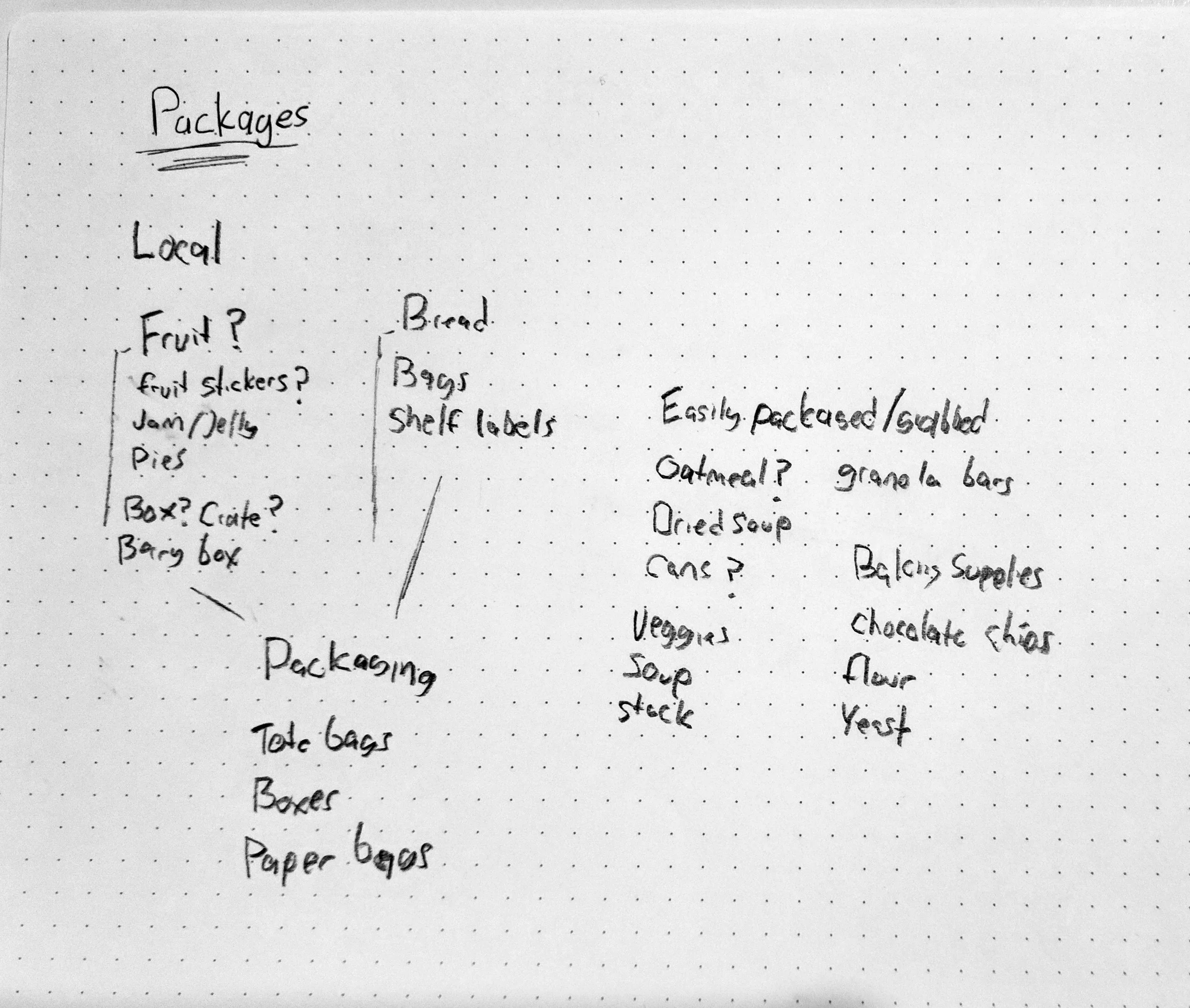
It came to me as I was working away — what if the grocer and the cafe had a specially branded product line? The proceeds would go towards one of many charities and nonprofits for social good.
The First Identity
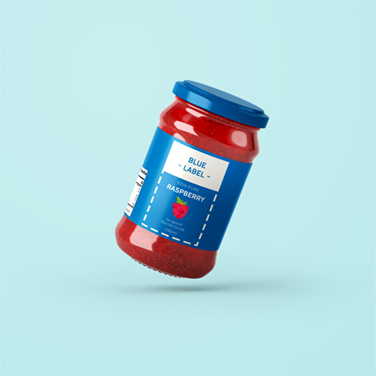
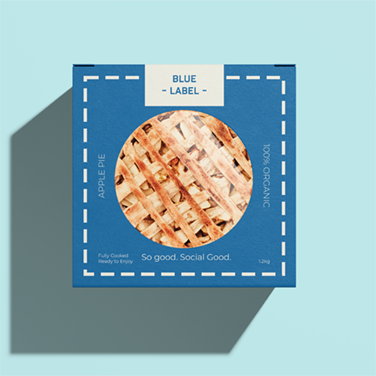
At first, the thumbnailing and color palette choices for the brand were very tame — a middle blue with very traditional type.
I incorporated a dotted line motif and boxy line elements to the packages, but this identity felt a little bit too much like a big corporation trying to brand a product to look like it’s socially conscious.
Breaking the Cycle
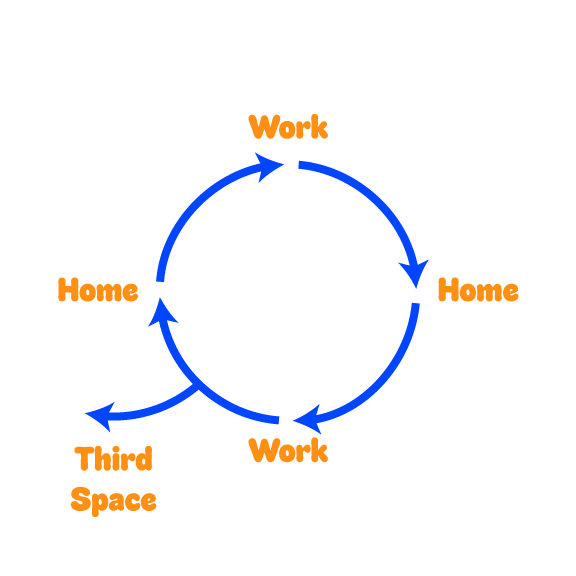
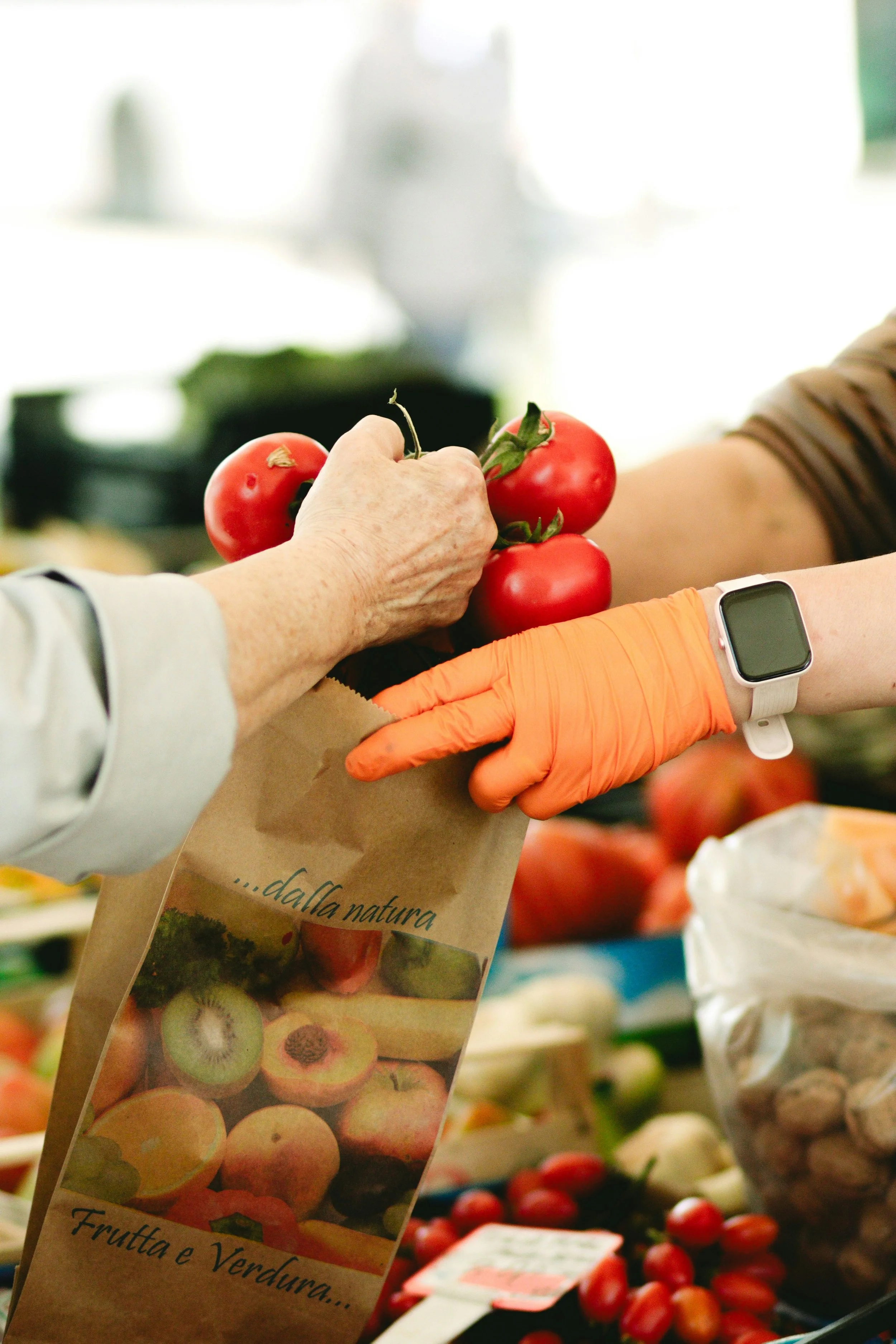
I had read an article shortly before about the diminishing of ‘third places’. Third places are those places that aren’t at somebody’s home or workplace where they could exist, socialize and otherwise get away from the work-home-work-home cycle.
These spaces disappearing has removed an important ‘out’ for people to escape the cycle of home being the only place one goes outside of their workplace. In the case of the retired, it provided a valuable place to socialize and get out of their homebound routine.
100%
of surveyed people that were 65 or older preferred service and community over efficiency and speed.
The most desired addition to their experience was a comfortable space.
Following that, most responders wanted an opportunity to support local practices.
From Corner Company to Good Neighbour
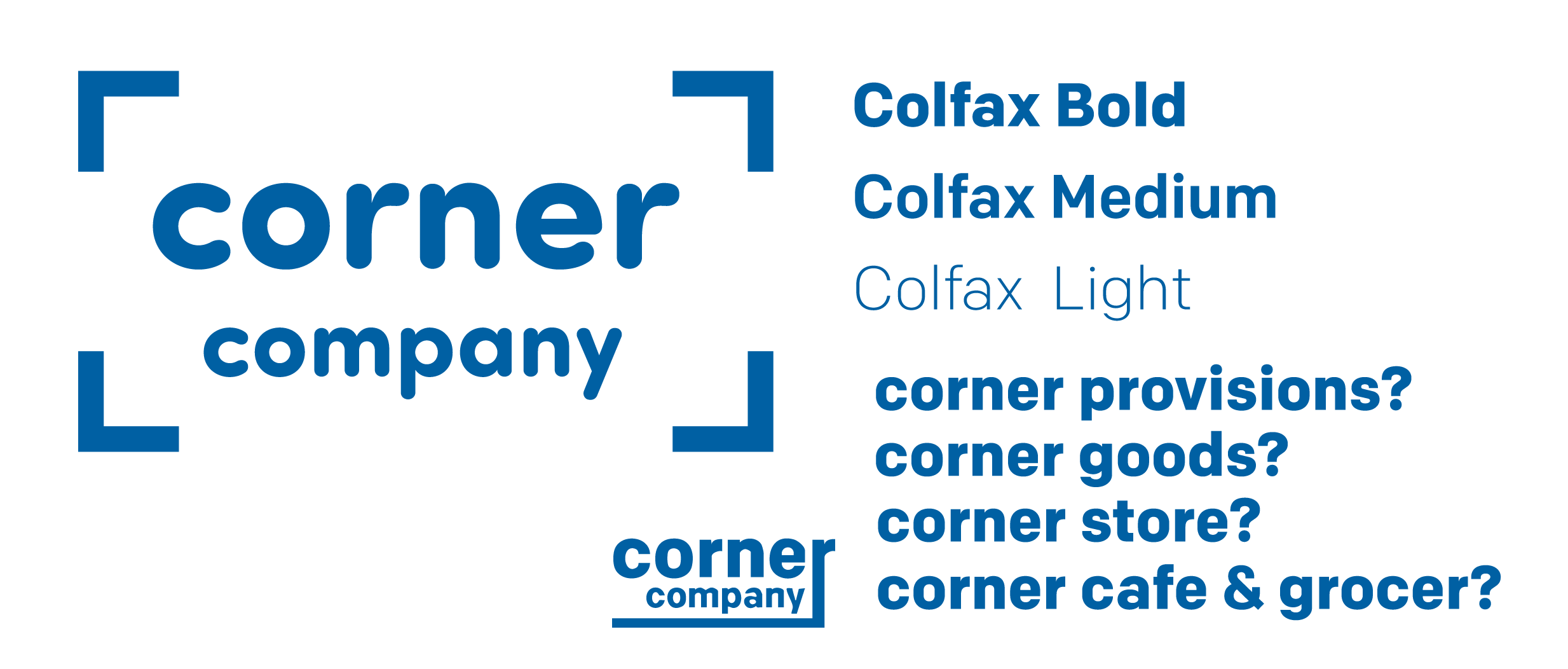
I changed the name from Corner Company, and after some conferring with professors and other designers came the final brand identity: Good Neighbour.
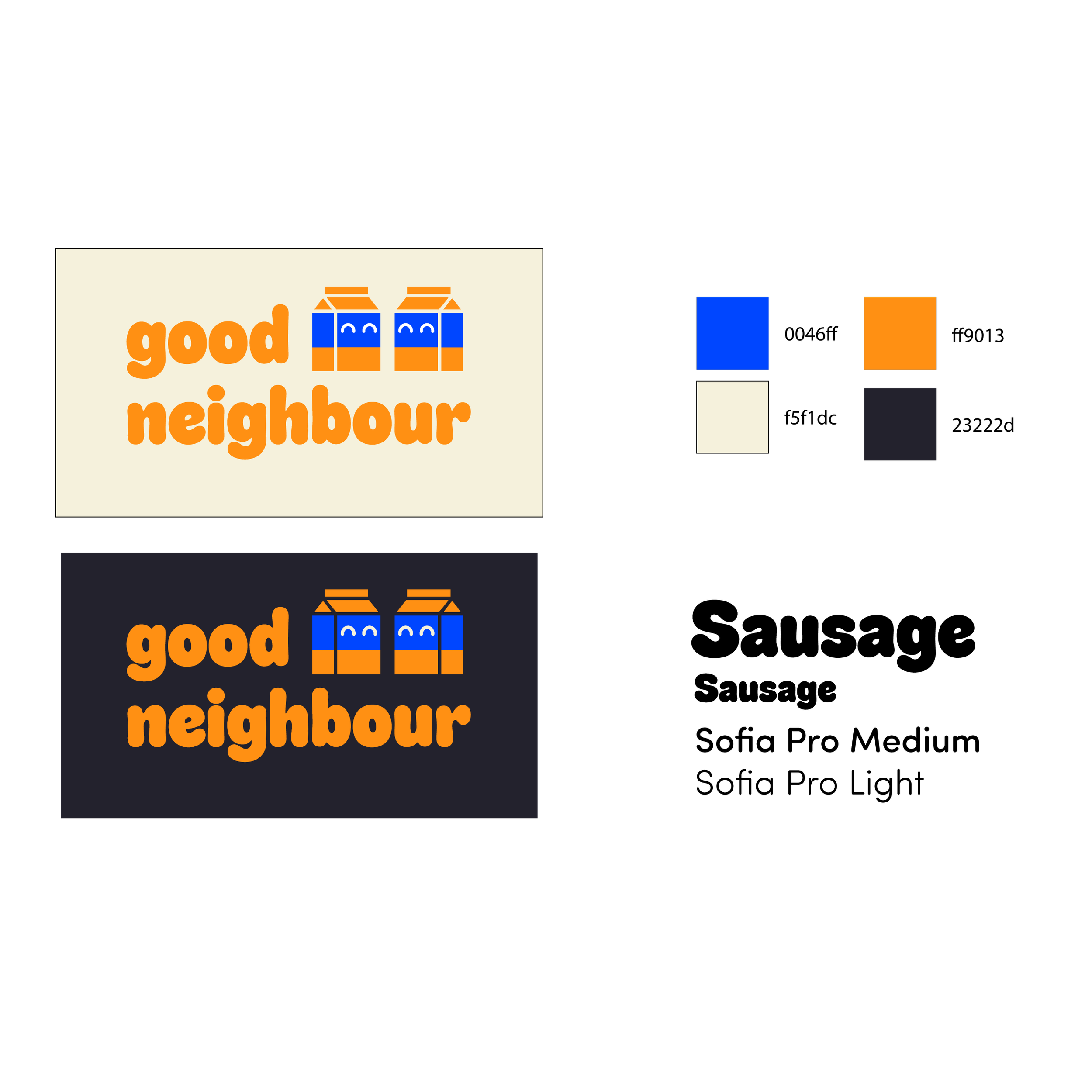
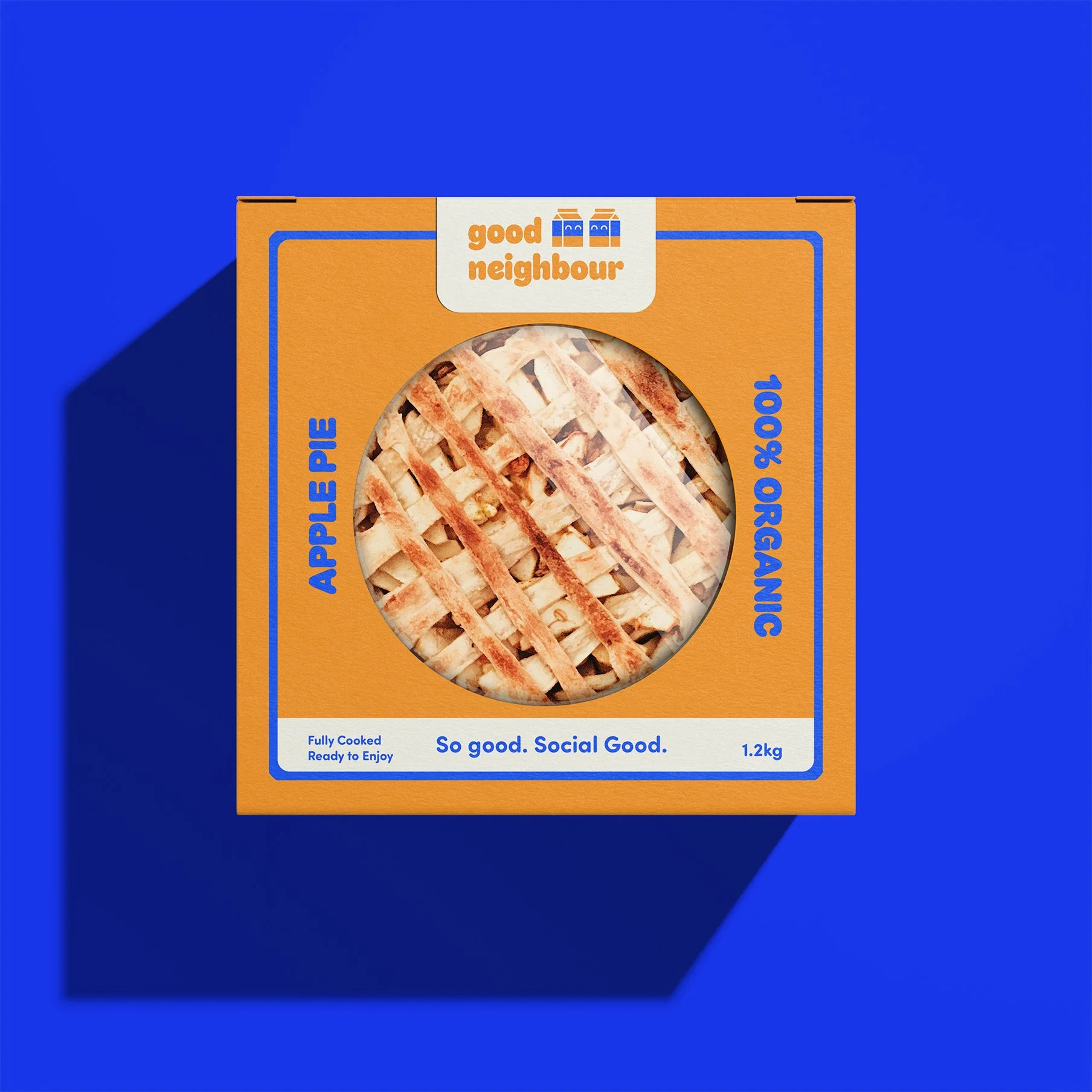
This used much brighter colors — a contrasting orange and blue brought an energy to the brand that was missing. I changed out the very traditional type which in comparison was quite sterile for a rounded, friendly font.
Revising the package design mock-ups I had made for ‘Corner Company’, once I brought in the identity of Good Neighbour, it seemed to revitalize the project. I felt invigorated and the packages sprang to life.


Meeting the Neighbours
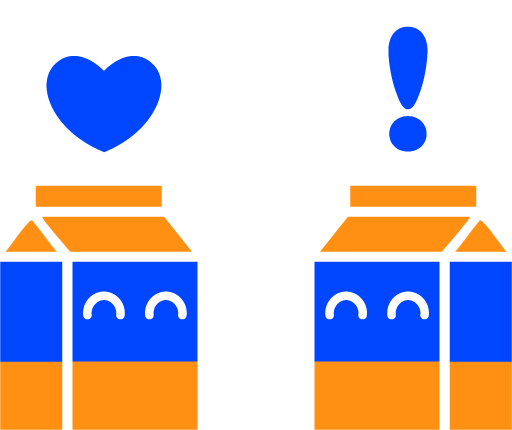
This sort of project suits a mascot. He’s a little fella shaped like a carton. Then, I gave him a friend — not only to reinforce the community-minded focus of Good Neighbour, but to help balance out the logo’s large amount of white space on the right side of the word ‘good’.
Conclusion
If Good Neighbour leaves the world of conceptual design, it could definitely serve a worthy cause — especially in today’s world of ever increasing digitization and optimization.
This project gave me a lot of insight towards the issue, and having time to use our design skills to meaningfully improve on a problem that we found important to us was a really valuable experience.
Sometimes, people just need a space to relax, decompress, and see a friendly face or two, and a friendly, local grocer could be just the thing.